
Article by Olivia Stephes
Nearly half of students at St. Cloud State University are facing food insecurity—an issue that continues to intensify as more students rely on the campus food pantry for consistent access to healthy meals.
Interim Dean of Students Rebecca Peine says 43% of SCSU students experience some form of food insecurity, meaning they face disruptions in consistent access to nutritious food. For many, the campus food pantry has become a crucial resource.
That need has grown quickly. The university saw a 21% increase in students using the pantry from October to November, a spike Peine links to the recent disruption in SNAP benefits, which left many students suddenly without a key source of grocery support.
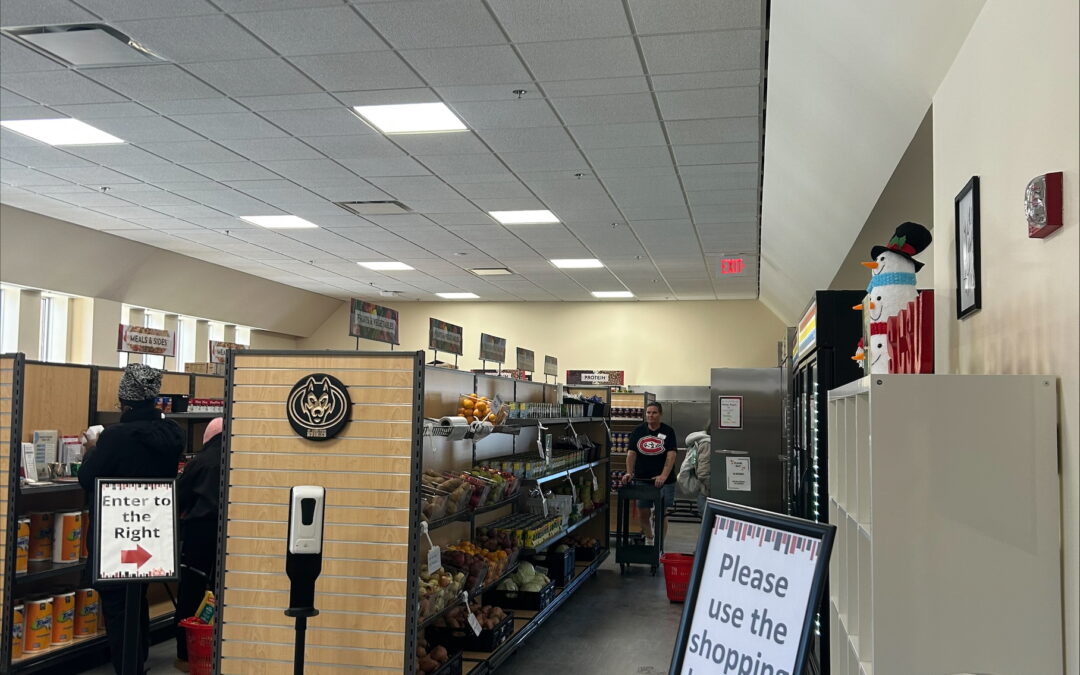
Inside the pantry—set up to mirror a familiar supermarket experience—students can find options ranging from shelf-stable goods to frozen foods. Certain staples fly off the shelves.
“Peanut butter, peanut butter, peanut butter,” student volunteer Nova and Dr. Peine mentioned in multiples, explaining that it’s consistently one of the pantry’s most popular items. But the selection goes far beyond basics.
Students with dietary restrictions or cultural food needs can also find recognizable staples.
“We have pastas, grains, rice,” Dr. Peine said. “We do have a halal meat program… It’s a very diverse student population. That’s a bunch of different palates coming in.”
To make students feel comfortable and reduce the stigma around seeking help, the pantry is intentionally designed to look and function like a typical grocery store. Rows of shelves, full-size coolers, and shopping carts help recreate the experience.
“The approach they take here is really humanistic,” Nova said. “Students walk in and say, ‘It looks like a real grocery store.’”
Food insecurity among college students isn’t unique to St. Cloud State. It’s part of a national trend. Peine noted that a decade ago, only around 80 food pantries existed on college campuses. Today, there are more than 800, reflecting the growing awareness of students’ basic-needs challenges.
As research on campus hunger expands, universities nationwide are recognizing how access to food directly affects academic performance.
“You can’t learn calculus or biology or chemistry if you’re concerned about where that next meal is going to come from,” Peine said. She emphasized that students shouldn’t wait for a financial crisis to seek help. “Don’t feel like you have to navigate those things alone. It doesn’t have to be a crisis to use this as a resource.”
The pantry allows students to visit once per week, giving them access to all major food groups and a judgment-free space to meet an essential need.
Peine and volunteers hope more students feel comfortable utilizing the service.
“I really encourage you to use this resource,” she said.
Students looking for hours, eligibility, or donation opportunities can visit the Dean of Students Office or the pantry’s website for more information.


Recent Comments