
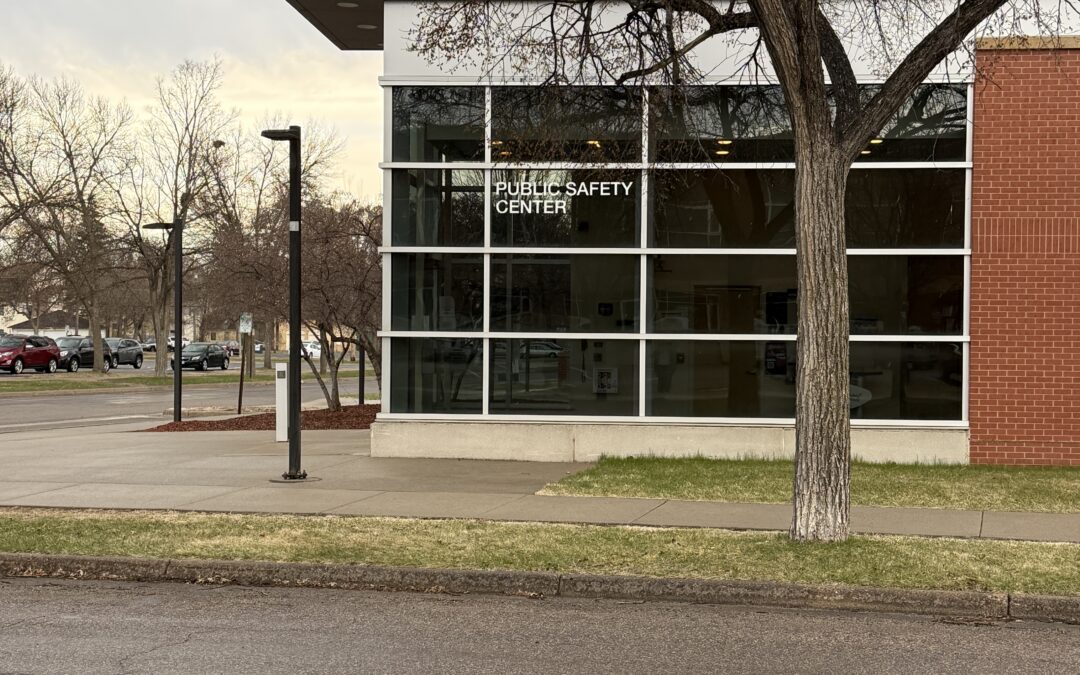
Article by Kayla Williams. Photo by Olivia Simonson.
Parking on campus is meant to minimize stress and create a balance for those who claim their right to park there. Others think differently and see parking as a strategic inconvenience.
Public Safety Director of Parking, Safety, Risk, and Emergency Management. Kevin Hammond, who oversees parking regulations, policies, and things of that nature. Says the parking system is structured to provide a balance of revolving, cost, time, space, and safety to maintain accessibility on campus.
“We have students, staff, and visitors that all need to access campus facilities,” Said Hammond, “So we try to balance the number of spaces and how they’re used.”
Staff Sergeant Olivia Witt with Public Safety added that parking is only a small part of their responsibilities.
“We deal with everything from trespassing individuals, ensuring safety on campus, patrolling buildings, and helping with things like vehicle jumpstarts,” Winch said. “Parking is actually a very small part of what we do.”
Timing and Permit
Parking spaces are divided among students, staff, and the public by area; there’s a parking ramp for all groups if needed.
The expectations for the set up is to be simple, according to Hammond, “A lot of our structure is based on people coming to campus, parking their car, and then going to do what they need to do,” he said.
The campus has free parking a little away from the main campus after 3 p.m. While paid users, who pay an estimated $340, get rights to park in the lot they paid for, along with additional perks after 3 p.m.
“If you’ve got a permit, after 3 o’clock you can pretty much park in any permit lot,” Hammond said, “And there are some lots that are free in the evenings and on weekends.”
Winch confirmed that many students are unaware of this rule.
“A lot of people don’t know that after 3 p.m., you can park in other permit lots,” she said.
Hammond added that the permit is most cost-effective for frequent campus users, saying more than 7 hours on campus becomes the better financial choice.
Gianni Harrington, a graduate student, talked about their experience and opinion while parking at SCSU.
“A lot of events and classes happen between 10 and 2,” they said. “Free parking after 3 sounds good, but that’s not when most students need it.”
Hammond noted that parking requests are high during the day and that space limitations pose challenges.
“Everybody wants to park as close as possible to where they’re going,” he said. “But we have a limited number of spaces, especially in the center of campus.”
Opinion of Cost
With options available, students still say the cost of parking and permits is a problem for some.
Harrington doesn’t have a parking pass because of the price.
“I think it’s too expensive,” said student Gianni Harrington. “As a student, I’d rather put my money toward other things I need for school.”
That being said, Harrington relies on minute-to-hourly parking or off-campus spaces.
“I typically park in the four-hour spots or the 30-minute parking and just move my car,” they said. “It’s about three hours’ worth of time if I do it right.”
Harrington considers their approach to parking requires planning during busy hours because their typical parking spot is everyone else’s typical spot as well.
“You have to be strategic,” they said. “Those spots fill up during the times people are trying to avoid paying.”
With passes not being purchased and meter or free parking being the option, it can actually become cost-effective depending on your circumstances.
Witt said that meter parking can become more expensive over time.
“It might seem cheaper to pay for a meter, but it adds up really fast,” Witt said. “I did the math once, and it came out to around $2,000 compared to just a few hundred dollars for a permit.
Inconveniences
Parking policy is straightforward and adamant about violations like expired permits or time limits, etc.
“We try to make the rules very black and white….Either you comply, or you’re not.” Hammond said.
Harrington, on the other side,e has a bit of a disagreement about the truth of how straightforward public safety is.
“My worst experience was when they towed my car, and the campus didn’t even know where it was,” they said. “I had to call different tow companies to figure it out myself.”
However, Harrington also received smaller citations, such as parking a foot too close, you’d get a ticket is how they described it.
Hammond’s response to situations like this is that students can go and appeal those citations via an independent process.
“We try to look at the behavior and the situation, not the person,” he said. “There are cases where people make honest mistakes, and those are considered.”
From an enforcement perspective, Witt said many issues come from students choosing not to pay for meters.
“The most common thing we see is people not paying for their meter,” she said. “That’s where most of our citations come from.”
Communication Issues
Hammond took into account issues coming from things such as miscommunication, along with misinformation being transferred throughout campus.
“One of the biggest issues we see is people asking someone else where to park and getting bad information,” he said.
Witt also shared her own experience with common parking mistakes.
“I got a ticket before I worked here,” Witt said. “I didn’t know where to park and didn’t read the sign because I was in a rush.”
Public safety updates and shares information through newsletters, emails, and on their website, Hammond said students may not look at those.
The situation involving Harrington reflects Hammond’s points, where relying more on trial and error than on the provided help goes in line with the flow.
“You just figure it out,” Harrington said. “That’s what most of us are doing,” is how they described it.
Witt said students missing information often comes down to not checking those updates.
“If you don’t check your email, you might miss important parking information,” she said.
Parking Changes
Public safety higher-ups may shift the parking system, though it is not confirmed.
“There’s been discussion about making parts of campus more pedestrian-focused,” Hammond said.
Meanwhile, students like Harrington want changes like free parking during peak hours.
“I’d like to see it be free, or at least free during part of the day,” they said. “That’s when most students are actually here.”
For now, parking at SCSU remains to balance itself out, with where policy and lived experience don’t always align.



Recent Comments